
Background
As part of my master's thesis, I conducted research to explore innovative ways of designing virtual possessions for XR environments
Industry / Project type
XR (Academic)
Team
Solo project
My Role
Research and design
Tools





Preliminary research question
Could virtual possessions in the realm of spatial computing be as meaningful to the owner as their physical counterparts?

What is a possession and what makes it meaningful?
A possession is simply defined as something that one owns. It is not bound by legalities or physical ownership but rather involves the process of psychological appropriation that leads to a person perceiving something as “theirs” (Belk, 1988). Modern day possessions can be classified into three categories: Physical, hybrid and virtual (Golsteijn et al, 2012).
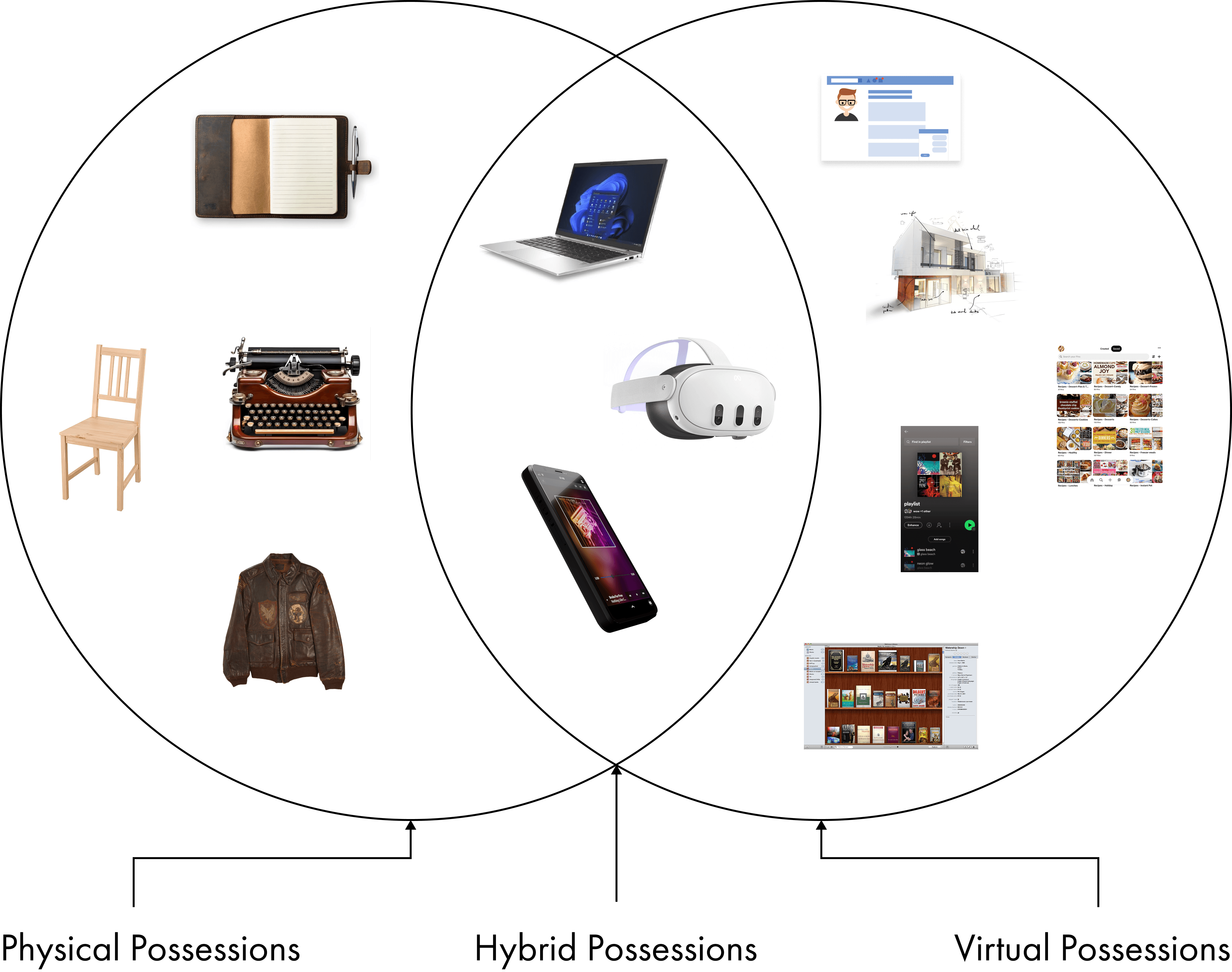
A possession becomes meaningful when it triggers association to mental concepts that hold personal significance to the owner.
Csikszentmihalyi & Rochberg-Halton (1988)
An object becomes meaningful through the interplay of function, symbolism, and material qualities.
Meaning is not just embedded in what an object does (its function) or what it represents (its symbolic value), but more critically in what it is—its materiality and the sensorial experiences it offers.
Verbeek, P-P. (2005)
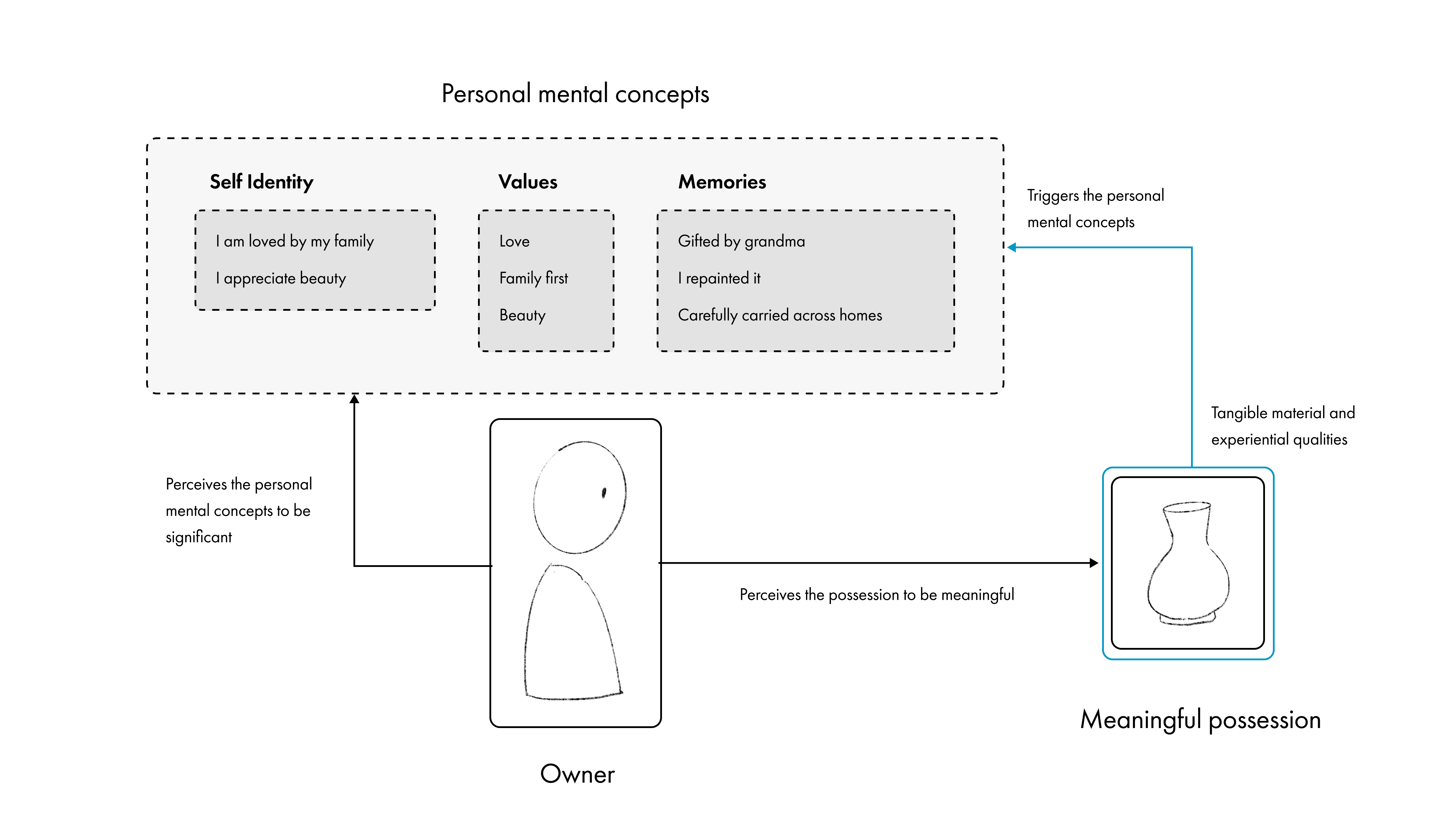
Are physical and virtual possessions equally meaningful?
people do not make meaningful associations with virtual possessions and even when they do they still struggle to identify those possessions as meaningful. Virtual possessions, in general, are not valued as highly as physical possessions (Orth et al., 2019). People perceive digital possessions to be too transient, abundant, difficult to know and control to become distinct from homogenous commodities.
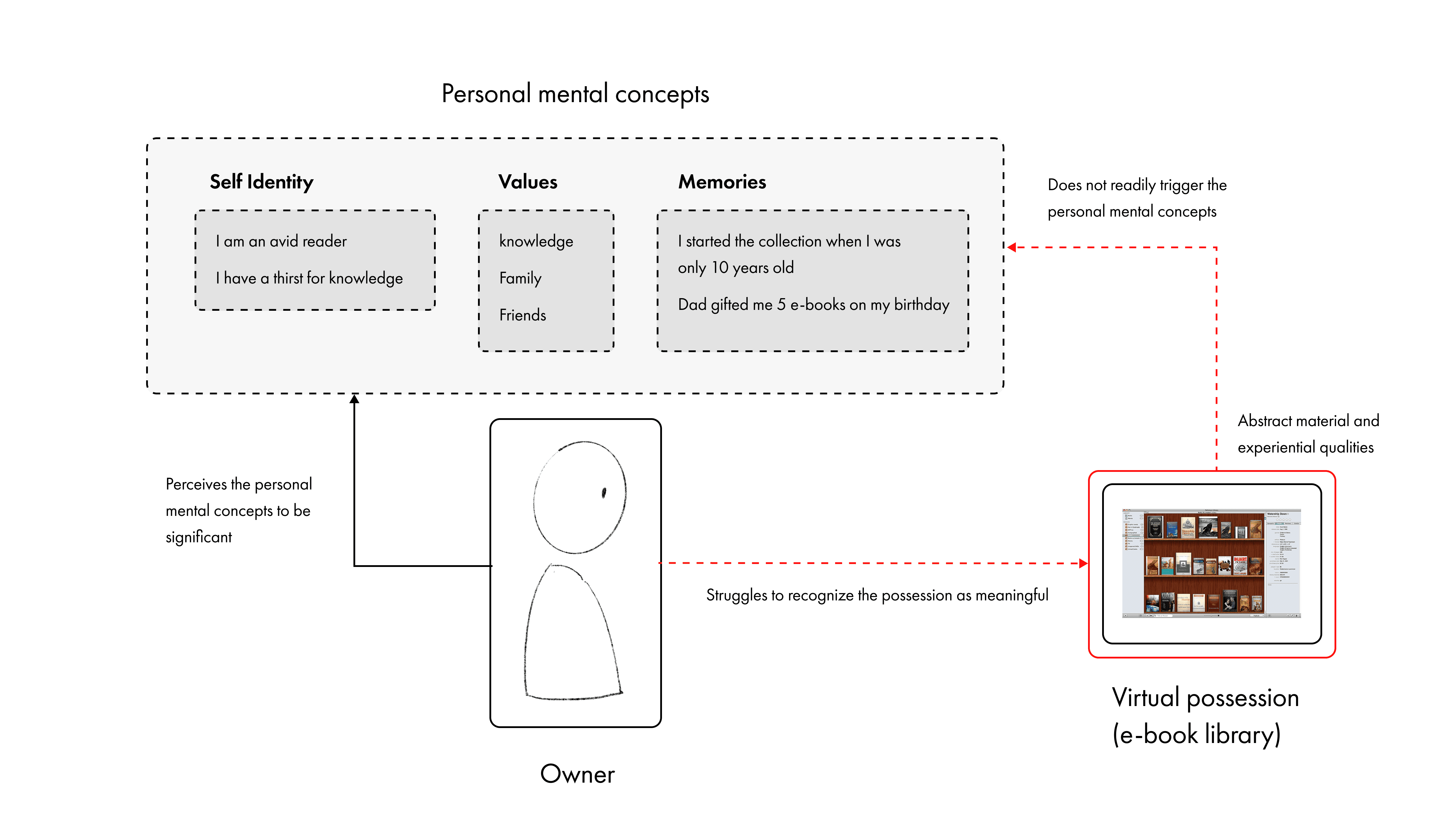
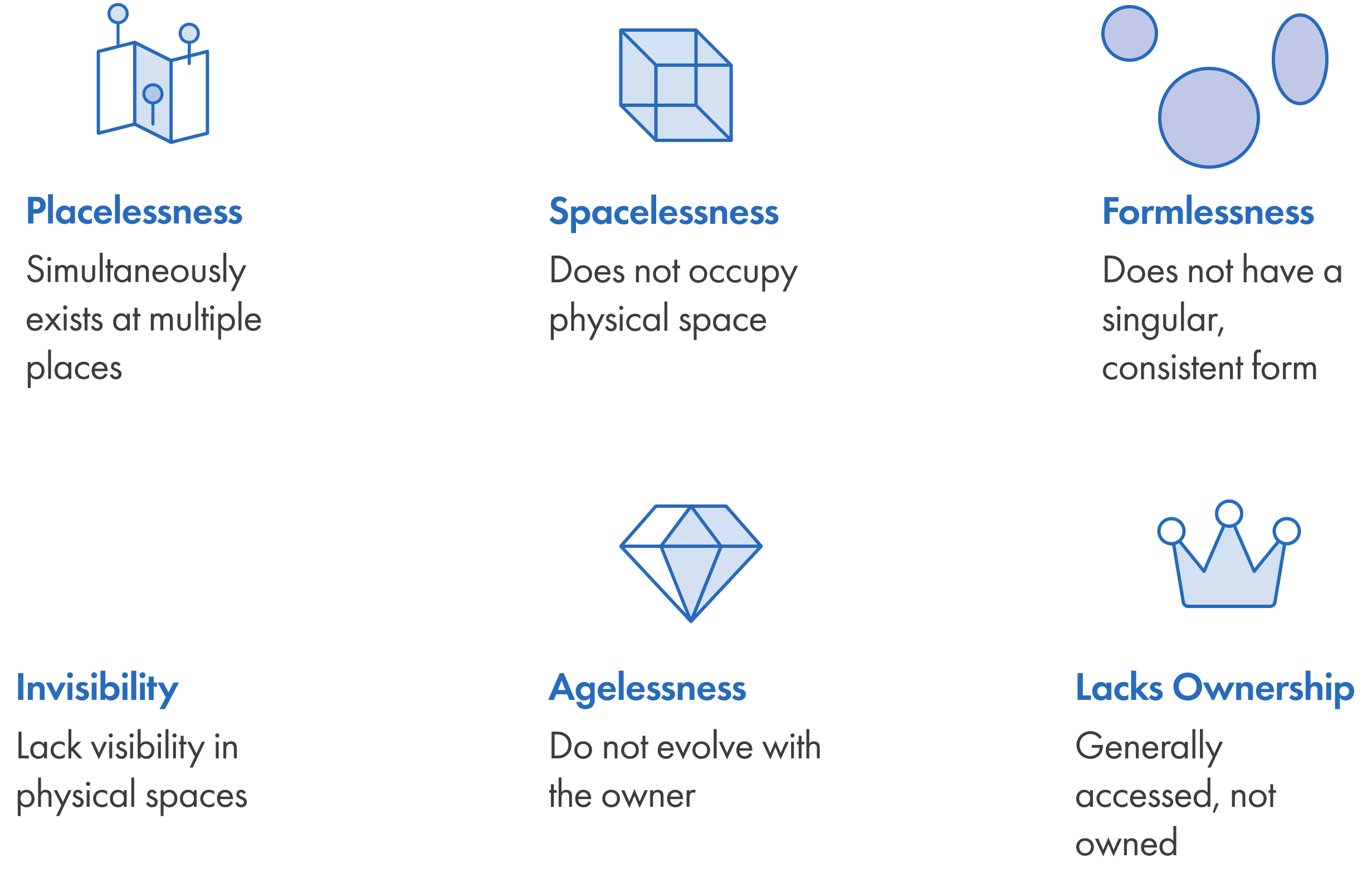
Why can't people recognize virtual possession to be meaningful?
Several qualities of virtual possessions can be observed which make them convenient but at the same time reduce their ability to be perceived as meaningful to their owner.
Narrowed research question
How might we design the material and experiential qualities of virtual objects that exist in extended reality (XR) environments so that they may become meaningful possessions?
STRATEGY 1
Design formful containers
As Orth et al. (2019) observe, people tend to value virtual content such as photos, music, and books. Re-imagining how we experience these forms of content in XR could be a promising direction. Designers can explore the quality of containment as a way to materialize meaningful virtual associations.
Virtual possessions’ formlessness hinders the process of forming associations to mental concepts like memories, relationships, values etc. preventing the owner from forming meaningful attachment (Odom et al. 2014). Introducing a considered and tangible form can help a virtual possession more effectively embody its significance
STRATEGY 2
Involve owners in the process of creation and enable personalization
When people create or shape their virtual possessions themselves, the flexibility of formlessness can become an asset, allowing the object to evolve alongside their personal narratives. Numerous studies have shown that handmade or deeply personalized items often become people’s most meaningful possessions (Denegri-Knott et al, 2012, Belk, 1988, Mugge et al., 2009).
STRATEGY 3
Introduce thoughtful limitations
Several features of physical possessions such as placefulness and spacefulness, which are known to be limitations, can be re-imagined in the virtual context.
STRATEGY 3
Support interactions rooted in traditions and rituals
Interactions through care rituals, gift giving, or co-creation can also aid in meaning making. One approach is to design virtual possessions that visibly change over time, prompting users to engage in routine actions—like polishing, organizing, or “repairing”—to maintain or enhance their appearance.
Treasure Troves: An experiment in designing meaningful virtual possession
Based on the strategies derived through research, I imagined Treasure Troves as a virtual collection of content designed to become meaningful for its owner.
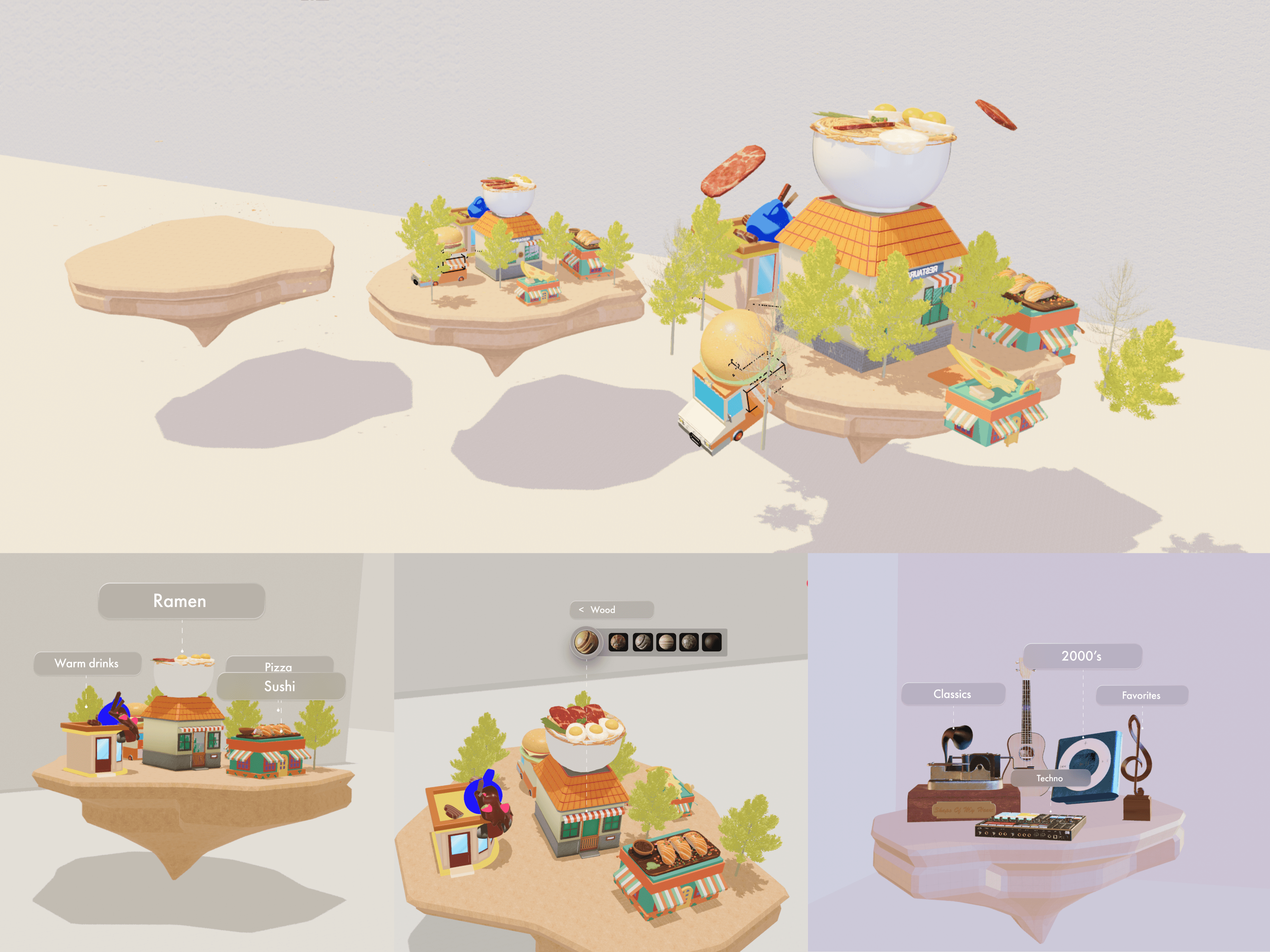
A Treasure Trove is an innovative way of creating virtual collections in XR. It is a virtual object that takes on a three-dimensional, tangible form of a floating island and allows users to curate collections of virtual media content
What are the material and experiential qualities of Treasure Trove?
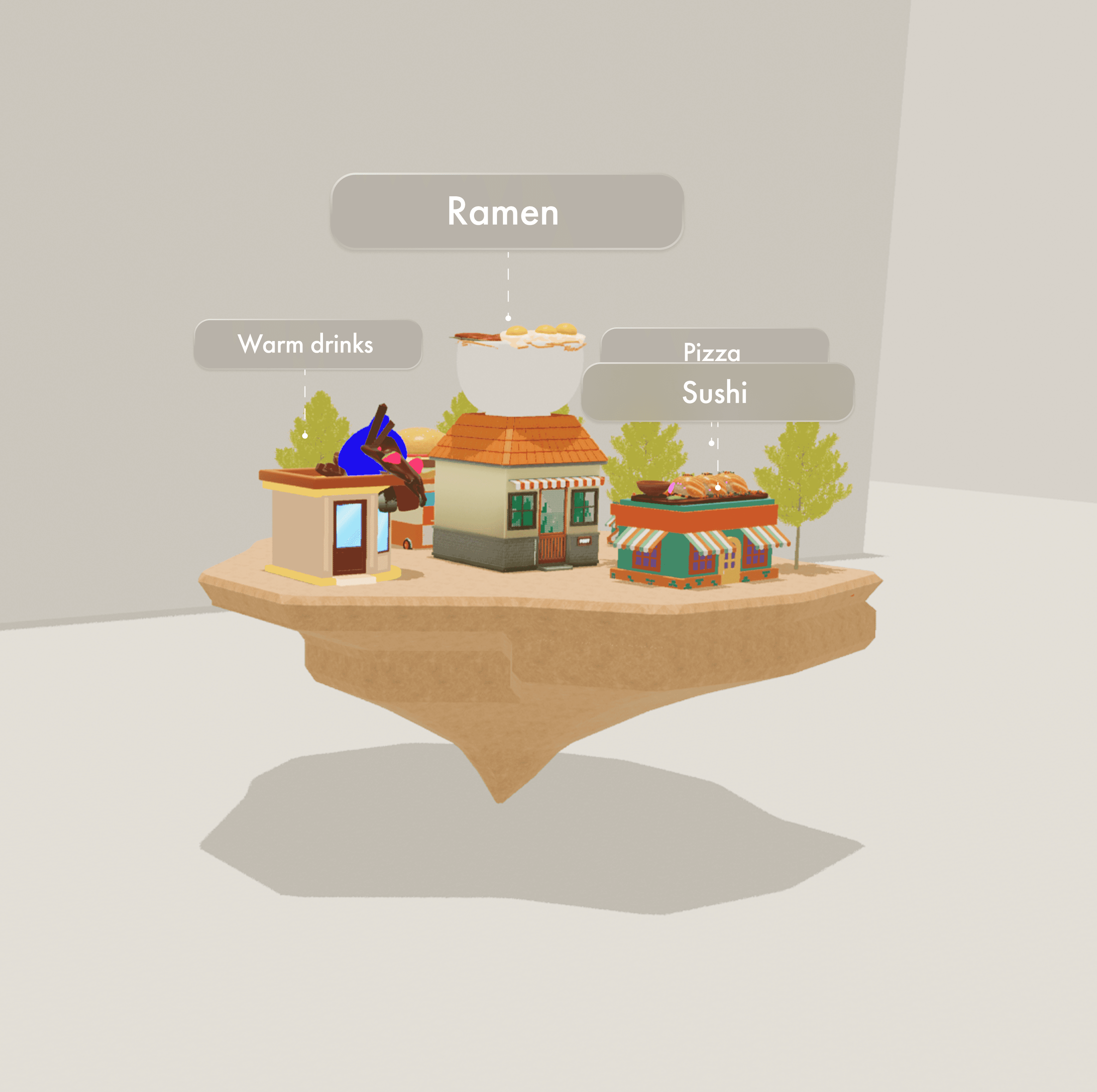

Formful container: The floating island form was selected as a metaphor to say that a person’s hobby or interest is not merely a component of their existing world, but rather a distinct world in and of itself—one that the individual creates and inhabits.
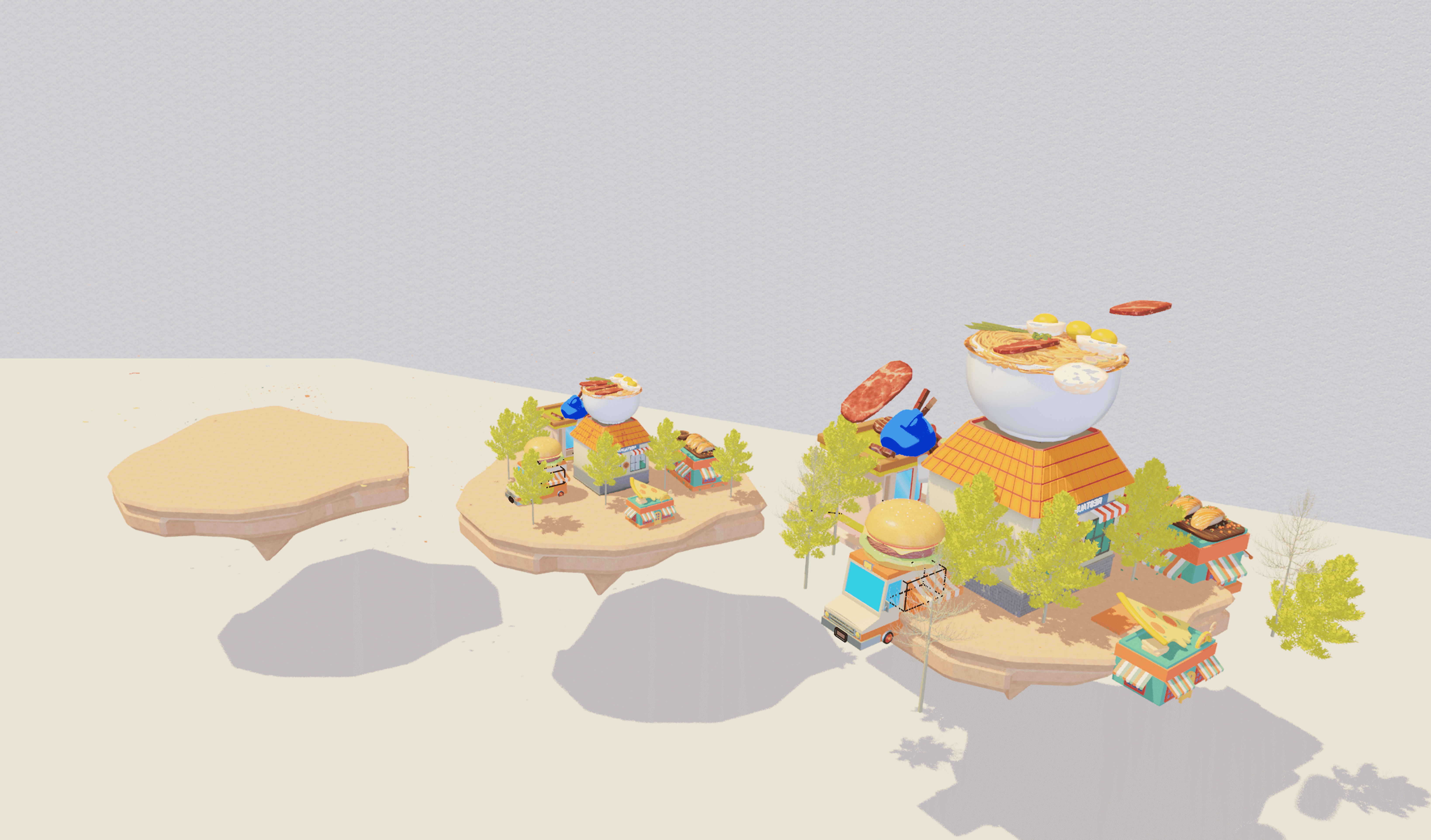
Embodying the experiential quality of spacefulness, a Treasure Trove tangibly grows in size as the content within it increases in quantity. It ultimately starts falling apart after reaching full capacity, prompting the owner to re-evalutae, dispossess, curate or archive their collection.
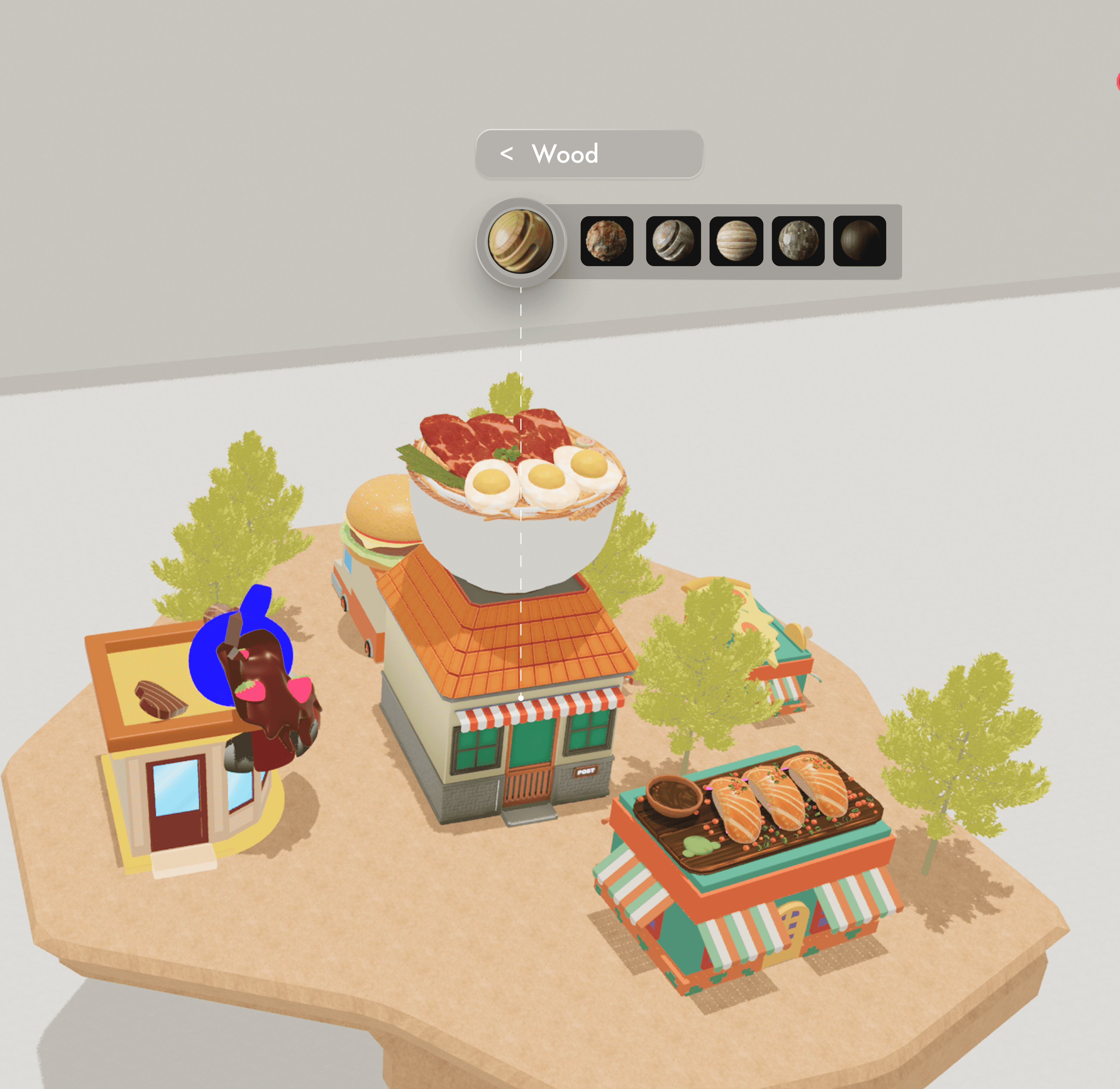
involve owners in the process of creation and enable personalization: Depending on their skill levels, owners could build the form of the elements on their island from scratch, or pick a form from an asset library and perform customizations like picking colors and materials.
This project is still in progress. Please reach out to access the thesis document and learn about next steps.
Sorry!
Thank youuuu!